Latest Post

We have all experienced food cravings at one time or another. Whether you love salty foods or if it’s sugary sweets that get your mouth watering, it can be hard to pass up your favorites. Oftentimes, food cravings feel out of our control and that can be frustrating when you’re trying to stick to a healthy diet. But what if you could train your brain to crave healthy foods? Research seems to indicate that you can do exactly that.

According to Medical News Today, food cravings stem from the same brain region that manages memory, pleasure and reward. This can make food an emotional experience for some people. For instance, if you received a food treat from a parent, teacher or other authority figure as a reward (or a means to cheer you up—perhaps after a doctor’s visit), then an emotional link might be created.

Over time, this can undoubtedly contribute to the food cravings that we experience. Even as adults, we often reward ourselves with food. These actions create lifelong habits that link food to feelings and make cravings challenging to overcome. Specific hormone imbalances or nutrient deficiencies have also been linked to food cravings, says Medical News Today.

5 Cravings That Could Signal a Health Condition

Read More

First and Foremost: Recognize your Cravings

crave healthy

Understanding these attachments is an important first step in attempting to move away from them—which is admittedly difficult. For many, certain foods have strong emotional experiences connected to them. This can make it seem nearly impossible to let go of those feelings. However, creating awareness of these emotions and coming to terms with why you might be craving a specific food can play an important role in stopping those cravings in their tracks.

This boils down to being more self-aware. In the same way that you should ask yourself “Am I really hungry?” (sometimes, honestly, you may be thirsty), you should also think about asking yourself “Why do I really want this food?”

If it has more to do with how it makes you feel, then it’s a craving. The good news is, unlike hunger, cravings will fizzle out over time if you don’t give into them.

Practice Mindful Eating
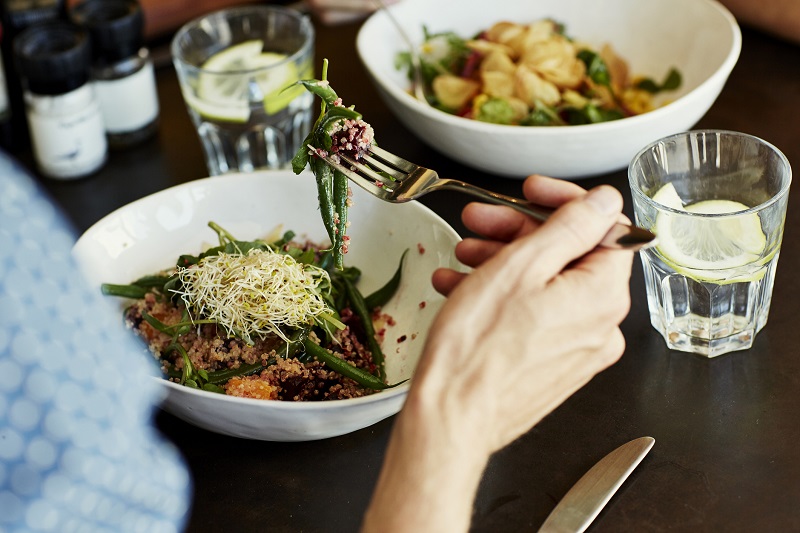
mindful eating

In your effort to be more self-aware, you should also aim to practice mindful eating. This means paying closer attention while eating. Don’t eat when you’re distracted, such as while watching television or reading. Mindful eating can help you avoid overindulging, while also helping you become more aware of what drives your cravings and desires to eat in the first place.

Also pay closer attention to how you feel after eating something. For instance, while you might feel an immediate rush of pleasure after gorging on donuts, chances are you don’t feel that great later on.

5 Ways Slow Eating Can Increase Weight Loss

Read More

Make Healthy Foods a Regular Part of your Diet

crave healthy

Even if you’re not someone who outright craves healthy foods, making them a regular part of your diet can, over time, start to re-train your brain.

According to Healthline, dopamine is released when sugar is consumed. They explain that dopamine is a main neurotransmitter involved in the “reward circuit” connected to addictive behaviors. This may explain why many studies are now discovering the possible addictive nature of sugar in humans.

However, those who decrease their sugar intake often say they stop craving it. Some have even said that it doesn’t taste as good when they’ve had it down the road, often using descriptions like “sickeningly sweet.” Harvard Health says that eating less sugar-containing foods can lead to decreased cravings. They recommend keeping foods with sugar out of sight and of mind, while purchasing unsweetened varieties of your favorite foods like yogurt, tea and oatmeal. It’s easy to add your own sweetness with a healthy alternative like stevia, monk fruit or erythritol.

The fact is, once you start living a healthy lifestyle, your body can begin to crave the proper nutrients in order to help maintain that lifestyle. Harvard Health recommends eating a balanced, nutritious diet filled with whole grains, lean proteins, fruits and vegetables.

Tracking Your Food

crave healthy

Research has also indicated that a food journal can help you lose weight, says Harvard Health. The NuMi app by Nutrisystem is a great tool to use for this. It will help you greatly in your effort to practice more mindful eating, to be more aware of your cravings and ultimately to make healthy changes that will help to re-train your brain to crave healthy foods.

The most important thing is to be patient and to give it some time. A change like this won’t happen overnight. But if you put in the effort, you can overcome cravings and have long-term success.

6 Ways a Food Journal Helps You Lose Weight

Read More

The post Can You Train Your Brain to Crave Healthy Food? appeared first on The Leaf.


from The Leaf https://ift.tt/2Ef9a6n

In Megan’s Blog:

Megan RamosOur Top 5 Strategies for Dealing with Holiday Meals that Go Sideways

.


Calorie restriction doesn’t work

Dr. Fung’s newest video clearly lays out the evidence

Check out the newest video on the members site! The Aetiology of Obesity: An evidence based look at calorie restriction for weight loss and its dismal failure is a physiologic hormone-based theory of obesity which more completely explains the clinical picture. Hosted by Dr. Fung, it’s a great primer that’s based in fact, not commonly-accepted junk science. 

TFM Members

.


Dr. Fung on Low Carb MD

Tackling fasting misconceptions
Over on the Low Carb MD, host Brian Lenzkes and Dr. Jason Fung discuss the misconceptions surrounding intermittent fasting, as well as the powerful benefit of a low-carb lifestyle combined with fasting.

.


Plating and Mindful Eating

Coach Nadia Pateguana redefines the concept of ‘Plating’ to be about more than just food presentation

“Plating” is a word I didn’t make up, but I think I made up a new definition for it. 

To me, “Plating” means bringing all the foods you want to eat onto your plate, or the table around your plate, and only starting to eat when you are sitting in front of that same plate. 

You do not eat as you are cooking. You do not eat as you are walking around. You don’t graze. You don’t eat in your car. You don’t eat while you are working or watching TV, or doing anything else. 

You only eat when you are sitting, in an eating area, in front of the plate you’ve decided you’re going to eat from – and you eat as many of the foods that you have brought together as you feel like until you’re satiated. 

That’s what I call “Plating” (and not the act of professional food presentation, as the above beautiful picture illustrates, or the act of plating metals with silver and gold, lol).

You can see how my type of “plating” is important for mindful eating. It obviously eliminates mindless eating on the go, and it also eliminates grazing, which is particularly important for TRE (Time Restricted Eating), Intermittent Fasting and lowering insulin (which is our common main goal).

Plating, as I think of it, will eliminate grazing as well as snacking. If you make the decision “to plate” and only eat when you are “plating” then you will only have full, rich satisfying meals. 

I think this has had the biggest impact on my entire journey and what has kept me consistent. This coming from someone who has never had a real, full meal in my entire life until I was well into my thirties. So, remember: How you eat is truly more important than what you eat.

.


Get your brew on

Sunday is International Tea day

Did you know that Sunday is International Tea Day? (Did you know that there is an international tea day…? Well, there is, and it is!) 

Tea – especially green tea – is a fantastic tool when it comes to fasting and healthy living. If you haven’t already read it, be sure to check out Dr. Fung’s explanation of some of the benefits here. As Dr. Fung describes it, teas is “one of the cheapest, easiest and most powerful ‘bio hacks’ around,” so why not take advantage of it?

.


Out and about!

If you’re looking for some pointers, be sure to catch coach Brenda Zorn’s master class on extended fasting every Thursday at 11 am ET, or coach John Clary’s EF class on Saturdays at 10 am ET. Both are great if you’re looking at taking on fasts that range in length from 48 hours up to seven days. You’ll learn what to expect during longer fasts, and how to troubleshoot problems. 


TFM Members

.


The post TFM Round Up – December 13, 2019 appeared first on The Fasting Method.


from The Fasting Method https://ift.tt/2Ef0nkT

Do you find yourself still full of energy even as the clock nears a “bedtime hour?” Or, conversely, are you tired at night but wake up ready-to-go in the morning? While many do consider themselves “in between,” or find that it changes at different points in their lives, a lot of people tend to identify as being either more of an “early bird” or more of a “night owl.” And the fact is, there’s more to it than just personal preference. There is actual science behind why some people feel their best in the morning—and some at night.

5 Ways Sleep Deprivation Is Affecting Your Weight

Read More

Here’s what research says about early birds versus night owls:

It’s in Your Genes

genes

Like so many factors related to the way our bodies operate, the answer just may be written in our DNA. A study of nearly 90,000 people who had their genomes sequenced was able to identify 15 specific loci that were significantly associated with being a morning person. According to the National Human Genome Research Institute, loci tell us the location of a specific gene on a chromosome. These study findings were published in Nature Communications and joins a growing body of research looking to understand how our bodily clocks work. They point to the fact that we just may be hard-wired to perform our best at a certain time of day—making it a difficult thing to change.

Can I Become an Early Bird?

early bird

Even though research seems to point toward humans being genetically programmed to have certain periods of “peak alertness,” there are still plenty of people who would like to change their body’s natural timing. Most commonly, the preference is to become an early bird—largely because of life demands such as work, school and children. In other words, just because you’re not hard-wired to be a morning person, doesn’t mean you can start rolling into work late or failing to get your kids ready for school. Many of our life commitments and demands start in the morning—whether we’re feeling ready or not. For this reason, many people look to try and alter their “body’s clock.”

While you certainly cannot change your DNA, there are things that you can do to help get a better night sleep so that you can wake up feeling more energized. For instance, some experts recommend eliminating blue light before bed, which is emitted from electronic devices like your laptop, phone or tablet. According Harvard Health Publishing, multiple studies have shown that exposure to blue light can suppress melatonin and impact the circadian rhythm.

Though it’s challenging, this means that you should avoid watching TV or looking at your phone or computer for up to two to three hours before going to sleep. Adhering to a regular sleep schedule can also make a big difference, says Healthline.

Can’t sleep? Click the link below for five reasons why:

5 Reasons You Can’t Fall Asleep at Night

Read More

Use Your Natural Tendencies to Maximize Workouts

early bird

Being aware of whether you are an early bird or a night owl might also help you to get the most out of your workouts. Plan to perform your exercise when you are at your period of peak alertness. If you are an early bird, get your exercise finished first thing in the morning whenever you can. You’ll have tons of energy and will likely push yourself harder. If you’re more of a night owl, try to fit in a stop at the gym on the way home from work or go for a run in the evening hours. Again, working with your body’s natural clock may help you perform your best and really maximize that workout in order to burn the most possible calories. On the Nutrisystem program, we recommend 30 minutes of exercise per day.

Listen to your Body

early bird

In general, just paying closer attention to your body’s signs will help you make better choices and lead an overall healthier life. If your body is telling you “I’m tired,” you might be pushing yourself too hard or trying to pull from energy that you just don’t have. Pay closer attention to what your body is telling you and make the most out of the time where you’re feeling your best.

How to Get More Sleep & Completely Change Your Life Tonight

Read More

The post Are you an Early Bird or a Night Owl? What the Research Says appeared first on The Leaf.


from The Leaf https://ift.tt/2LNb3ex

You’d think the season that makes you want to curl up on the couch with a heated blanket, a bowl of beef stew and a hunk of bread might be the worst time to expect to lose any weight.

But you can make winter the best time for weight loss. The chilly season has loads of advantages—not the least of which is that it’s chilly. Sound intrigued?

Here’s why winter is the best time to lose weight… and how to make the most of winter’s charms:

1. Have some soup.

You know you want to. Winter is traditionally soup season, and if you choose a low-fat vegetable-based soup, particularly if you start your meal with a cup, you can count on eating fewer calories during the meal. In a study done at Penn State University, people who had soup before lunch actually consumed a higher quantity of food, but 20 percent fewer calories at the meal, than when they had the same meal without a soup appetizer. The secret: You can eat plenty of a veggie soup without piling on the calories, plus it helps fill you up so you don’t eat as much during the rest of the meal.

Luckily, if you’re on Nutrisystem, you have access to tons of delicious, hearty and nutritionally-balanced soups that have already been prepared for you. Make sure to add more to your winter menu by customizing your next order. (Not sure how to customize your order? Click here for help >) Or, if you like your soup as a side dish, click on the link below for 16 Nutrisystem-approved soup recipes perfect for warming you up while you continue to slim down.

Soup’s on: 16 Tasty Soup Recipes the Whole Family Will Love

Read More

2. Hit the gym, the slopes, or the mall.

After the holidays, your opportunities for social activities tend to take a dive. What that means is that you have more time to focus on getting healthy and fit. Even better, once January 1 rolls around, many gyms and fitness programs offer deep discounts so working out is never cheaper. Can’t afford a membership? Think about the mall. Many malls open early in the morning to accommodate walkers who take advantage of the wide, well-lit, and pedestrian friendly “paths” with the added bonus of restrooms, water fountains and importantly, safety.

Don’t forget winter’s outdoor adventures, like skiing, ice skating, snow boarding, cross-country skiing and sledding. You can burn about 400 calories an hour just playing with your kids on their snow saucers and sled, says the National Personal Training Institute. Click here for a list of 12 more winter activities that torch calories >

3. Stay chill.

Research suggests that cold temperatures can trigger the growth of brown fat, which burns far more calories than white fat, which is more abundant in the body. Researchers at Maastricht University in the Netherlands found that being cold (though not to the point of shivering) can help you burn three to 30 percent more calories. (With its freezing cold temps, it’s no wonder winter is the best time to lose weight!)

Being outside can help, but you may have limited tolerance to winter weather. But studies have found that keeping the thermostat on the colder side can also help increase brown fat activity while also helping your body use glucose more efficiently. Too much glucose lagging in the bloodstream is a symptom of metabolic problems, such as prediabetes and type 2 diabetes. In one study, reducing indoor temperature to just 61 degrees resulted in brown fact activation.

7 Winter Weight Loss Diet Mistakes to Avoid

Read More

4. Catch More ZZZs.

More hours of darkness and cooler bedroom temperatures can help you get more sleep, making winter definitely the best time for weight loss. That’s important because studies have found that not getting enough Zzzs is a risk factor for weight gain. The National Sleep Foundation suggests bedroom temperature should be between 60 and 67 degrees F for the best sleep. It’s your body’s natural state for sleep. Your body temperature actually drops to put you to sleep so keeping the thermostat a little lower will help you drift off faster. They also recommend that, like bears, you encourage some winter hibernation by keeping the room in cave-like darkness.

5. Embrace the motivation.

Ever hear the phrase “Summer bodies were made in the winter?” It’s true! You may have months before you have to worry about how you’ll look in a sleeveless dress or a bathing suit, but think of winter as the gift of time to pare off pounds and get healthier.

And don’t just focus on how you’ll look. Losing just five percent of your body weight can help lower your cholesterol, stave off diabetes, and lower your blood pressure. You can pick a goal, like a spring or summer 5K to raise money for your favorite charity, and take the entire winter to train for it.

The post 5 Surprising Reasons Winter is the Best Time to Lose Weight appeared first on The Leaf.


from The Leaf https://ift.tt/2QqzZNk

First, there is no wagon.  There is no such thing as getting off track.  You are human.  Food is in an abundance right under your nose and it’s your human nature to want to devour it all.  It’s not that you lack willpower and are weak.  You can’t fight centuries of human nature.

So, what happens if you end up “caving” and eating that gingerbread or go overboard on the potatoes this holiday season?  Nothing terrible.  You’re not a bad, weak or terrible person.  You’re not a failure.  You didn’t fall off the preverbal wagon.  You. Are. Human.

This is the biggest issue I see people struggle with during the holidays.  It’s so problematic that it sometimes destroys the meaning of the season.  Fighting evolution is crazy.  You need to stop.  You’re not a failure.  It’s not your destiny to be sick and overweight.  There’s no need to beat yourself up.

Cake may be eaten.  Gingerbread may be eaten.  Ice cream may be eaten.  It’s life.

Well, what do you do if these things do happen during the holidays?  Try these 5 stratgies to get you back to feeling good and in control in no time.


  1. Don’t let it drag on after that indulgence

There are two main problems we see after someone promises themselves, they’re going to eat “perfectly” at a holiday party and end up having something they’re trying to avoid.  For some people this affects them on a deep emotional level.  They feel pathetic and worthless.  They have the mentality that if they can’t get through one party resisting a cookie, then they might as well throw in the towel and eat everything they want since they’re never going to succeed.

You are not a failure.  You are human.

Other people are quick to forgive themselves but say “if I had a cookie, then I might as well have the potatoes, bread, pasta, pie, cake and pizza.  This will be my last time ever eating this junk food, and from now on I’ll eat perfectly!” 

“One Last Syndrome” is very real.  Don’t fool yourself.  You’re human.  Pizza is going to happen.  Cake is going to happen.

The best piece of advice I was ever given was that it doesn’t matter what you did that knocked you down.  That didn’t define your character.  What determined the type of person you are is how you pick yourself back up.  What will define your success is what you do after you eat that cookie.

Remember, it’s progress, not perfection.


  1. Drink water

Quench your thirst with a cup of water.  Many people are often quite thirsty after consuming sugar and starch.  We often mistake thirst for hunger.  You can drink flat or carbonated water.  It can be hot, warm, room temperature or cold.  Just make sure you hydrate.


  1. Eat some fiber

You want to be careful consuming sugar with dietary fat.  Instead, go for some leafy greens and non-starchy vegetables, such as brussels sprouts, broccoli, cauliflower, asparagus or bell peppers to help you feel satiated.  If you can, try adding some vinegar, such as raw, unfiltered apple cider vinegar, to the vegetables.  This will help reduce your appetite and help stabilize your blood sugar levels.


  1. Move

Later that day or the next day get moving.  Go for a walk.  Hit the gym.  Do active chores at home.  Get moving to help force your muscles to use up some of that sugar.  Moving is critical to get the body quickly back into a state of fat burning, also called ketosis.


  1. Fat fast

Fat fasting is a great tool to use if you’re feeling hungry and have strong cravings for sugar the day after an indulgence.  Click here to follow our guide to fat fasting.  The rules are straight-forward:

  • Eat when you’re hungry or craving
  • Limit your food variety down to very few food types for a monotonous diet, which will be reduce hunger
  • We recommend eating meals constructed of bacon (can substitute with sardines, salmon or another fatty protein), eggs and olives
  • Avoid nuts and nut butters (unless you’re a vegetarian), dairy and natural sweeteners of any kind
  • Use healthy fats, such as coconut oil, olive oil and grass-fed butter for cooking
  • You can include leafy greens and non-starchy vegetables
  • Bone broth, tea and coffee are permitted

You might find that you’re eating quite a lot for a day or two, but most people find that by the end of the week they’re back in control of their cravings and find fasting and eating well to be effortless again.


No holiday season indulgence means you’re going to fail to achieve your health goals.

  • Megan Ramos, The Fasting Method Co-Founder


The post Our Top 5 Strategies for Dealing with Holiday Meals that Go Sideways appeared first on The Fasting Method.


from The Fasting Method https://ift.tt/34caz8c

MKRdezign

Contact Form

Name

Email *

Message *

Powered by Blogger.
Javascript DisablePlease Enable Javascript To See All Widget